Suggestive Relaxation

In the oft recited 23rd Psalm there is a phrase I am learning to appreciate. David writes: The Shepherd makes or lets me rest in green meadows and leads me beside quiet streams. (vs.2). So which is it? Make or let?

I did a little research and the one thought that bubbled to the top was the Shepherd cannot make the sheep lay down. They won’t do that until all their needs are met. Therefore, because verse 1 is true, verse 2 is possible.

But sometimes I don’t know all my needs are met because I’m so hyper-focused on my wants. I’m stomping through the wilderness wondering about when my next meal is coming (next provision) and I practically trip right over it. I’m such a dumb sheep.

But there is also a rich gift here that I have only too recently begun to recognize and appreciate.

Last fall I began utilizing a program of hypnosis/suggested relaxation to address my food/weight issues. The first thing I realized was that I didn’t know how to relax.

I have often said that as the oldest child of alcoholics (albeit functioning ones) I learned early on to be hyper-vigilant. This was a must for self-protection and in my attempts to keep my siblings from upsetting the parents. The latter was not something I did very well. The residual effects of these behaviors has left me constantly busy and pretty good at reading an audience.

Relaxing has too often felt self-indulgent. It reminds me of a book title I saw once, “When I Relax I Feel Guilty.” Intriguing while it might have been, I didn’t have the time to read it.

But rest is something different. It is holy. It is gift. It will also be the topic of my next sermon series. I found a quote which caused me to pause and reflect on my need to make more room in my life for this holy gift. The quote is from Jerry Flora’s book, “Classic Friends (p. 15).”

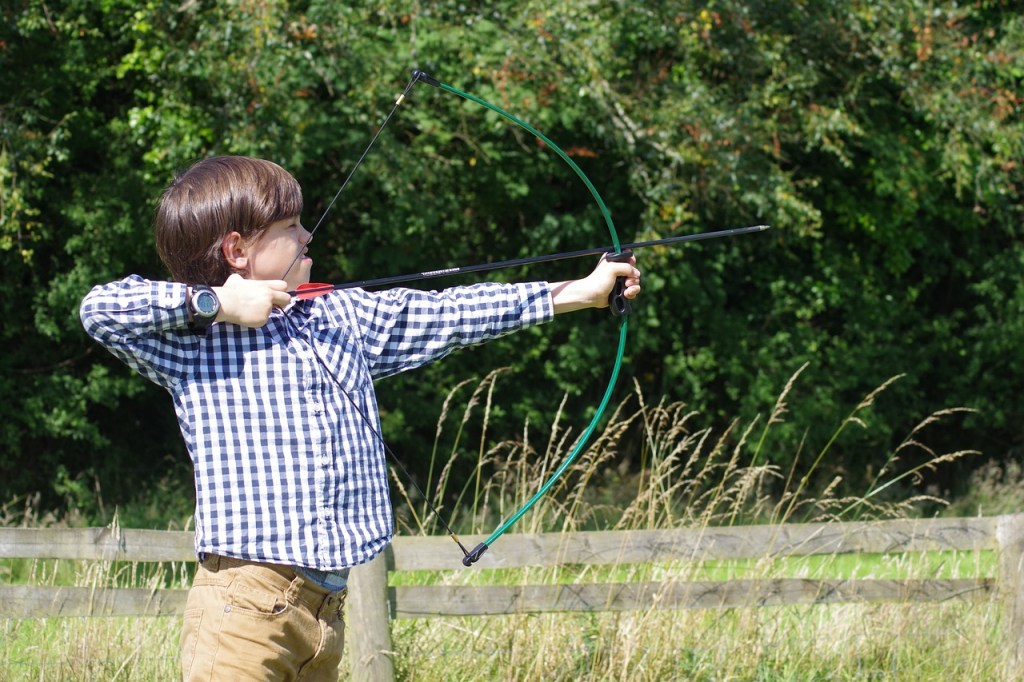
“On relaxing: Once Abbot Anthony was conversing, with some brethren, and a hunter who was after game in the wilderness came upon them. He say Abbot Anthony and the brothers enjoying themselves, and disapproved. Abbot Anthony said: “Put an arrow in your bow and shoot it.” This he did. “Now shoot another,” said the elder. “And another, and another.” The hunter said: “If I bend my bow all the time it will break.” Abbot Anthony replied: “So it is also in the work of God. If we puts ourselves beyond measure, the brethren will soon collapse. It is right, therefore, from time to time, to relax their efforts.”

Once upon a time a pastor was chastised by a hard working peer when found engaged in a soul-feeding pastime. The peer proudly pronounced that since Satan never took a day off, neither would they. Clearly unimpressed, the resting pastor, compassionately responded with a clear redirection: My friend you are following the wrong example. Then went onto to point out that even God rested from creative labor.

I’m not sure what you’ll be able to take away from this. I hope that you can sense the provision, presence, and promise of the Shepherd…and that you find rest for your soul. There really are green pastures and quiet streams just for you.
A Long Scrutinizing Look

We just came through the Advent and Christmas season at the church where I pastor. We have “looked” at the events of Christmas through the eyes of some of the major characters (Joseph, Mary, the shepherds, and Herod). On the final Sunday of the year I invited them to think about living with eyes wide open, expecting God to work in and through them. To drive the point home I even gave them a pair of stick-on googly eyes to put somewhere to remind them. (You can hear the sermon here: https://www.youtube.com/live/S5lCB1nqhkQ?si=YJKQyPkGFvhaobtR )

Then this morning I did my Midweek Refresh lesson (you can find it here: https://www.facebook.com/615192221/videos/1701598427084687/). In the text of Matthew 7:1-5, Jesus is speaking to the crowd about judging. One of the things I gained new insight on is Jesus concern with the hypocritical nature of their judgment. He was pointing out the negative impact of hypocrisy and holding others to a higher standard that the “judgers” held for themselves. I expressed that when I feel a judging spirit rising in me I need to turn the camera around and look into my own heart. Most often than not, the things I don’t like either about others or what they’re doing are things I don’t like about myself.

When that was done, I picked up my copy of the Message and turned to the Psalm for this week, Psalm 46. Two parts jumped out at me. I want to consider one of them here. The text is Psalm 46:10. The most familiar version is “Be still and know that I am God. Yesterday we considered the CEB: That’s enough! Today: Step out of the traffic! Take a long, loving look at me, you High God, above politics, above everything.

In a devotional that accompanies The Message, I found and copied this statement into my Bible: Take a long scrutinizing look at what God is doing. This requires patient attentiveness and energetic concentration (Living the Message February 2/1).

Read those descriptors again, slowly. Let them find lodging in your mind and heart. Long scrutinization. Patient attentiveness. Energetic concentration.

Our fast-paced, over-packed, urgent and immediate life balks at the very suggestion that anything requiring more than a nanosecond of our attention is of any value. That kind of thinking will deprive us peace, joy, and love.

When we sense the gaze of our loving creator, it is the long look of pride, and delight, and everlasting love. That’s the look we need for our God. And I’m just going to put this here for us all to consider: yes, and for each other.

Today, take a long loving look at God. What do you see?

Fresh Reminders

Happy New Year!

Before I dove into my meditations for the day, I was hunting on the App Store for an app to help me better keep track of mileage. I wanted something easy (so I wouldn’t give up using it because it was too cumbersome) and free (because I knew I could go old school way cheaper than most apps with a little notebook and pen tucked in my console). I was just about to give up when I found the online/app version of the little notebook. Yay! Success.

I informed my hub of my find and declared my intention that 2025 would be the year of maintained recording! To which he expressed his gratitude and then sent this message: Only mileage for pastoral driving. Not back and forth to church. I replied with, yes. And he then sent this reassurance: Just making sure you understand. Not nagging.

My reply: No nagging assumed. I knew you were just expressing clarification and assurance. Taken as a gentle reminder.

Then I picked up my devotional, “Disciplines For the Inner Life” by Bob and Michael W. Benson (which I will be using this year as “home base” for my times of spiritual reflection. This week’s Psalm is Psalm 46. And right off the bat, I understood why.

(Side note: I purchased a new Bible and will be using it. It is the Anabaptist Community Bible which utilizes the Common English Bible translation. I am excited to immerse myself in this new translation and all its Anabaptist notes.)

Back to the Psalm: God is our refuge and strength, a help always near in times of great trouble. That’s why we won’t be afraid when the world falls apart, when the mountains crumble into the center of the sea, when its waters roar and rage, when the mountains shake because of its surging waves (vs.. 1-3)

Anybody else need the reminder that God’s is still with us? He continues: That’s enough! Now know that I am God!

I always read verse 10 as a much more gentle reminder: Be still. Sometimes a gentle reminder is sufficient. Like my husband reminding me that the expectation for tracking mileage wasn’t to be an onus or exhausting task. But this is a little different. When I hear, “That’s enough!” especially followed by an exclamation point, I hear a little more direction, maybe even borderline frustration. “Enough already! I know things feel overwhelming. I know you’re feeling fearful, frustrated, lost, and maybe like you’re in this all alone. But I’m still God. And no matter what you face “the Lord of the heavenly forces is with you.”

I don’t know what you’re facing. I just know that you, me, we don’t face any of it alone. Or we don’t have to. We can rest in the presence, promise, and provision of the great I AM. The peace of God can be known and can carry through the times when our world feels like it’s crumbling.

This is your gentle reminder, your fresh reminder as step into a new year. Let’s do this one together.

Remembering

(A reflection written in 2009…edited today…)

Remembering. In the movie “The Sound of Music”, when Julie Andrews’ character is comforting the children in the middle of a horrific thunderstorm, she sings a song. Don’t they always when it’s a musical? The song that is to bring them comfort is a recounting of all her “favorite things.” Maybe you remember a few: raindrops on roses and whiskers on kittens; bright copper kettles and warm woolen mittens. She simply remembers her favorite things, and then she won’t feel so bad.

Remembering. It’s a biblical principle. Back in the Old Testament God’s people are told to make a pile of rocks and the children are to ask what they are there for. Then the adults are to tell the story of God’s protection and provision. This way the story would not be lost from generation to generation.

I read an article this week that made a very bold claim—or at least I thought it was bold. The author said that we forget because we anticipate that we are going to forget. And if I could remember what magazine it was in, I would put down the whole quote. In essence: we forget because we don’t remember.

Perhaps that’s why there are so many references to remembering in the Bible, two hundred thirty three according to biblegateway.com.

Memory is a fickle thing. In my work with my little lady who has Alzheimer’s, I marvel at how she isn’t able to remember our immediate conversation but she can recount wonderful stories from her youth. She can tell you her recipe for homemade bread, but as she makes it she can’t recall if she put in the yeast.

One day she had been in her room for an unusually long time so I quietly peeked in the door to check on her. She was sitting on her bed by the bedside stand with her Bible open on her lap, her fingers running over the page as she read and reread Psalms. It reminded me of a time when I visited a woman in the hospital who was very close to death. Her lips were moving, but no sound was coming out. I leaned in close and heard her softly whispering, repeating the Lord’s Prayer. She was no longer conscious in this world, but her spirit was totally in touch.

Have you watched the news lately? It’s not for the faint of heart. There isn’t much “good” news being report. So we need to remember. What has God done for you, now or in the past? Where have and do you see his hand? Life is going to get harder and unless we become more intentional in our remembering, it will be very easy to forget.

Oh, and that article, it was in the January issue of Prevention, page 48.

But God!

(This article appeared yesterday in the Ashland (OH) Times-Gazette.)

I came to Phoenix, Arizona in January for a women’s clergy gathering. As is often the case, the experience was blessing upon blessing. My spirit soared. My faith was enriched. I made new friends—and not just the “pad my Facebook numbers” kind. I looked to the heavens and said, “But God, I don’t want to leave yet.”

Instead of coming right home, I figured I couldn’t visit Arizona and not visit my mom who lives south of Tucson. During my visit she became ill which resulted in a diagnosis of pneumonia and five days in the hospital. We opted to continue her recuperation at home with in-home health care. To describe this time as difficult would be an understatement.

During her convalescence, my mom asked if I would be willing to stay with her—permanently. This is a plan we had discussed the year prior during another illness. Because of that conversation, my husband and I also had a series of talks. We began to make plans: I would take care of my mom and he would stay in Ohio to take care of his. 

On paper and when we spoke, these things made sense to us. Even still, Mom’s request felt like a punch in the gut. I hadn’t expected it. I still had things to do in Ashland.  I looked to the heavens and said, “But God, I don’t want to leave yet.”

I have enough Bible under my belt to know when we say, “But God…” we are in essence telling him, “No.” Not a smart move. Telling God no negates all he wants and can do for us. The petulant child comes out of us. We stomp our feet, and pitch our fit. We tell God all the reasons why his plan isn’t good enough. 

My mom is the queen of pithy statements, homey proverbs. When she wanted to cut off our childish rants, she would say, “But me no buts.” I did a little research. That phrase has been around since 1709 when Susanna Centlivre coined it in the play, “The Busie Body.” These four words were used to cut off all objections.

In my experience, God has been good at cutting off my objections. When he nips my protestations, he uses my own words to redirect me to his power and plan. My whiny “But God…” becomes his “but GOD!”

A quick search through scripture shows how Abraham, Moses, Joseph, David, Jonah, and even Jesus knew the power of “but GOD!” Joseph puts the truth quite clearly when after suffering injustice upon injustice, he finally ends up being Pharaoh’s right hand man, which puts him in the perfect place to provide for the brothers who left him for dead. “You meant to do me harm, but God used it for good (see Genesis 50:20).” 

The Apostle Paul understood this too. In his letter to the Romans he writes, “But God proves his love for us in that while we were sinners Christ died for us (Romans 5:8).” When he writes about this to the Ephesians he lays God’s plan out quite plainly: Once you were dead because of your disobedience and your many sins (2:1); But God is so rich in mercy and he loves us so much that even though we were dead because of our sins, he gave us life through Christ (2:4); Therefore, you are not strangers, neither guests, but inhabitants of the city of The Holy One and children of the household of God (2:9).  

These are difficult days. Dealing with isolation, illness, financial devastation, can definitely bring out our worse whiny case of “But God…” Perhaps God, though,  is leading us individually and as a faith community into new situations that push us far beyond our comfort, far from where our own plans would take us. If we will surrender our plan, we open ourselves to power that is “but God!”

Imagine if you could interview the people I mentioned above, and ask them if they thought it was worth it to surrender their plans to God. They would probably tell you the journey wasn’t easy—but it was the best choice they ever made. 

Daily I’m learning to surrender my whiny protesting for my way so that I can find the power of “but God!” Need some extra power? Need a better plan? Check out what God can do when we but Him no buts.

Selah: What do these stones mean?

23EB1171-5018-4015-B81A-8C615ECA7F67

I love walking. I love walking in Arizona when I’m visiting my mom. Feeling blessed to be able to do that this week.

As we travel closer to Palm Sunday and Easter, I have been thinking a lot about rocks.

There are a lot of rocks in Arizona. I took the picture of the rocks on my walk the other day.

I wonder who put them there. I wonder why.

In the Bible, a pile of stones marked a special moment—a sign to remember. In the old hymn, Come Thou Fount, we sing: “Here I raise my Ebenezer, hither by Thy help I’m come.”

Do you know what that means? We aren’t singing about Scrooge. The verse is a thanks to God for his care in bringing us through or to something.

What has he brought you to…or through lately?

The stack of stones stand as a reminder to you, and a testimony to others that we have a God who goes with us (through whatever we’re facing) and brings us to where he needs and wants us to be.

Prayer: God, some of the things we’re facing seem difficult, confusing…okay—downright impossible. We can only get through with you. Help us. Sustain us. And we will give you thanks…and a testimony.

Lenten Thoughts: Fear

“The question is not what you look at, but what you see.” ~Thoreau

fear.jpg

My daughter thought she wanted to be a marine biologist. When it came time for college, she chose a school with a great marine biology program in Florida. For all her excitement, you would have thought we birthed the next Jacques Cousteau. The excitement quickly faded during her Intro to Marine Biology course. The professor took the class to a lagoon to “get their feet wet.” Annie froze—literally. Tearfully and woefully, she returned to shore unable to complete the assignment. The reason for her freezing: she couldn’t see the bottom. The fear of what she could not see totally immobilized her. She ended up dropping the course, withdrawing from school, and after a short stay in Florida, returning home.

fear1.jpg

Thinking of this I was reminded of Peter’s impetuous attempt at water-walking. He asked Jesus, and started out pretty confidently. It wasn’t until he took his eyes off Jesus and looked at the waves that he went down.

What was that about? I believe it had a lot to do with focus and fear.

Fear is the iceberg that all too often sinks our ship. Generally, what we can see doesn’t immobilizes us. It’s everything underneath. The things that we can’t see. The things we don’t know. The things we can’t control because we don’t know what they are.

fear2.jpg

I guess Annie got her fear of murky water quite honestly—from her mother. Nelson and I traveled to South Carolina after we married to visit my grandparents. On our way back we tent camped at Myrtle Beach. Nelson bought a two-person inflatable raft. Since he knew that I was afraid of creatures that could be lurking in the murky, he would pull me out from shore and while I drifted back in he would swim about.

The system was working great until a current caught the raft and I started heading for Miami. I was panicked. Nelson had swum so far out that he couldn’t hear my cries for help. When he finally realized what was happening, he swam as fast as he could to save me. As he arrived at the raft his feet hit the bottom. He stood up–in ankle deep water. The raft was floating over a sandbar. We still laugh about how silly I looked, and the irrationality of my fear.

fear4.jpg

Perhaps that is why Paul was so clear in his teaching that as believers we walk by faith and not by sight (see 2 Corinthians 5:7). Life gets murky. The waves rise around us. If we don’t keep our eyes fixed on Jesus, we’ll go under as easily as Peter did—even if we are only in ankle deep water.
What are you looking at when we are frozen by your fears? Not Jesus. So many of the stories about Jesus’ encounters were with average people addressing enormous fears and receiving unbelievable miracles.

What are you afraid of right now? Are you walking by faith or struggling with holding onto to what you can see? If you’re going to get out of the boat, keep your eyes on Jesus. If the water is murky and you can’t see what’s there, let your faith lead your next step.

fear3.jpg


Advent Begins

hide and seek.jpg

Ready or not…here I come.

Classic line from a child’s game, right?

I think it’s the perfect way to start our journey of Advent.

Readiness. How is one to get ready? Are we ever really ready?

We rush around getting ready for “Christmas” by buying, baking, and decorating. We’re experts in the “rush and hurry” department.

But in our hearts and minds, in our homes, and in our actions, have made room to receive this amazing give that is full of promise and saturated with peace?

He’s coming ready or not. Let’s be ready.

Loving and giving God, giver of all gifts. You know what is on our list, but you know what we truly need. In this season where the focus is often on the trappings and externals, we want to focus (oh how hard that is) and make room for the gift of your son, your self. May the mystery of what that is and how that is unfold and bring us into deeper trust and faith. Show us the path that leads to readiness and help us to walk in it. Amen.

ready or not Jesus.jpg

Nehemiah Devotions Chapter 2, Day 3

The king asked, “Well, how can I help you?” (Nehemiah 2:4, NLT)

WP Neh Devo time passing

Six months. One hundred eighty days, give or take a few, Nehemiah opened his eyes and wondered if today would be the day.

He trusted God each to be laying the ground work. And each day he prayed to be ready.

And the time had arrived.

Nehemiah opened his mouth and shared his heart with the king and queen. He laid it out. He said needed. He had prayed for favor and kindness.

And that’s exactly what he got.

I can’t begin to what had been going on in the heart and mind of the king. Was he just having a day of benevolence? In the six months that Nehemiah waited had something happened to endear Nehemiah to the king making the favor expressed as natural as the sun coming up in the morning?

I don’t know. I am just convinced that Nehemiah was seeing God’s greatness unfold before his eyes. If God could do that then there’s nothing he can’t be trusted with.

Nehemiah knew that. Do we?

WP Neh Dev 2-3 Prov 3 5-6

Nehemiah Devotions: Chapter 2, Day 2

Then I was terrified, but I replied. (Nehemiah 2:2b-3a, NLT)

WP Neh Dev 2-2 emotions

We learned at the end of the first chapter Nehemiah was the cupbearer to the king. It was an important position. He was a public figure and was expected to present himself accordingly. He took his responsibility seriously and consistently presented himself appropriately. Until now.

The burden he carried had become so great that the weight began to show on his countenance. And the king noticed.

Would this be interpreted as insubordination, or dissatisfaction with his job? Neither would be acceptable to the king.

WP Neh Dev 2-2 fear

At this point Nehemiah stood at a threshold. His response would leave him comfortable in the lifestyle he was accustomed to or throw him into the unknown as he followed God’s plan.

Nehemiah demonstrates great courage, and teaches us that courage doesn’t mean we won’t fear. We read here that Nehemiah was terrified. But in spite of his fear, his faith in the one who called him was enough to enable him to stand up and proceed across the threshold into the unknown.

Has God called you to step forward in faith? Are you afraid? Find your courage and confidence in the one who calls you.

Claim Paul’s words as you keep to the journey: And I am certain that God, who began the good work within you, will continue his work until it is finally finished on the day when Christ Jesus returns. (Philippians 1:6, NLT)

WP Neh Dev 2-2 Phil 1-6