Do No Harm

First, do no harm.

Quick! Where’s that from?

hippocratic

Hippocratic Oath? That’s what I thought.

Nope. After doing a little online reading, I found it’s not in the original Greek version. There’s a phrase in the Latin that might come close. It is believed the phrase came into acceptance somewhere in the 17th century.

Why does this matter? What drove me to even look?

I’m glad you asked.

Yesterday, on my drive to visit some folks who are completing a drug rehab program, I had a heart to heart with God.

At first I was trying to anticipate conversations and how I would respond. Okay, I confess I think these kinds of thing through for all kinds of encounters. I’m an old Girl Scout: I tried to always be prepared.

But the rehearsals in my mind were going nowhere.

So I stopped—talking not driving.

And I confessed how foolish I felt and I asked God what I needed to do.

Yes, I’m a trained pastor (two different Masters degrees for that) and a trained counselor (Masters degree and all kinds of continuing education), but we’re facing a giant of an enemy in this heroin epidemic.

This must be how David felt when he faced Goliath. (Okay, go ahead think current Pepsi commercials. See video below if you’re unfamiliar.)

God, I don’t know what to say. I want to offer your kind of lasting, life-changing, life-giving help. How do I do that?

 I know, not a very eloquent prayer—didn’t even say Amen at the end.

But God heard. And God spoke: Do No Harm.

donoharm.jpg

This is a huge request for an ESFP with ADD. I am not like my introverted friends who think and then overthink and maybe think some more before they open their mouths to speak. I think out loud. Words tumble out of my mouth faster than I can check them.

How do I do that?

Here’s what I did:

I listened. A challenging thing for an ESFP with ADD.

Listening requires intentional focus. Trust me: this requires more energy than a 30 minute workout at CURVES.

But I did it.

And I shared what I knew to be true.

This included some of my own struggle, but also a couple of my foundation scripture promises and fundamental counseling truths.

I’m not sure if we slayed the giant…but we did some serious damage. I left those appointments whoopin’ and hollerin’ for Jesus.

These were divine appointments and I was just along for the ride.

Check back for the next post where I’ll share one of those fundamental counseling truths.  (How’s that for a teaser?!)


**ESFP is a Myers-Brigs Trait Inventory designation (MBTI). When I take the inventory I identify as an Extrovert who takes in my surroundings through my Senses, makes judgments through my Feelings, and organizes Perceptively (which is kind of like no organization at all—think scattered).

If you want to check out the test just google it. You can take it online and receive your information.

**ADD is a psychiatric identification, Attention Deficit Disorder. My brain typically runs in scatter mode. I act before thinking. I get overwhelmed by too many instructions. I am highly distracted…squirrel!


Book Review: Intentional Warfare

Book Review Intentional Warfare.jpg

The goal of this book is to increase awareness of believers’ daily spiritual battles. Life, for the believer, is about battle training and being battle ready. According to Ms. Scro, being ready doesn’t happen overnight and only as we intentionally continue to grow.

This book has a great balance of scripture and personal experience. It is practical and pragmatic, not a dry how to book.

Included with each chapter are exercises that give the reader opportunity to train and try the principles being taught.

Book review Mary G Scro.jpg

I especially appreciated the format the author used. WARFARE is not just the theme, it is the outline and checklist for readiness. I like this because it makes it easier to learn the points and put them into practice.

The author also included an appendix that contained a list of her favorite books on prayer, spiritual warfare, and other related topics. I find these helpful in understanding what and who has influenced an author.

I recommend this book for believers seeking to go deeper in their understanding of and need for being spiritually armed and ready.

I received a copy of this book from the author in return for an honest review.

Ordinary Moments with God: Laughing at the Unexpected

IMG_20160105_091920906

I get the munchies sitting at my desk. I’ve been trying to eat better. I was debating between baby carrots and banana chips this morning. Banana chips won.

I reached into the cupboard looking for the opening bag, but I couldn’t find it. So I threw this bag in my lunch bag and headed out the door.

Later when the munchies hit, I pulled out the bag. I kept trying to rip off the top. Isn’t that the way most of these bags open?

Where was the tab? I didn’t want to ruin the zip closure. I like zip closures.

Why wouldn’t it it open?

I was about to grab my scissors when I realized: I already opened the bag. The pull tab couldn’t be found because it wasn’t there.

I opened the bag and poured out some chips to snack on–all the while laughing at myself.

The bag didn’t open the way I expected. I’m used to tearing off the top–so something must be wrong with the bag.

The answer was staring me in the face, but I couldn’t see it.

How many times do I respond the same with God?

Truth be told? Way more than I care to admit.

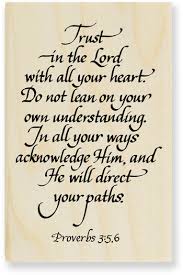
The verse that came to mind as I contemplated not trusting in my expectations was Proverbs 3:5-6

WP proverbs 3 5-6.jpg

If I want to get things right, surrendering my way of thinking, expecting, and understanding is the way to go. His path not mine.

PRAYER: God, I get so used things being certain ways. I’m comfortable with the familiar. Turning loose of what I know and understand is not easy, but it makes the most sense in the long run. Direct my paths and help me to be more “open” to the unexpected. Amen.


Teach Us To Pray

SP LP our father.verse2

Tomorrow morning I will be starting a series of messages on the Lord’s Prayer. When you pray “our Father” what are you saying, believing, doing?

The first thing I notice is the corporate nature of the prayer. We aren’t in this world alone.

When the disciples asked Jesus to teach them how to pray, he could have given them a theological dissertation based on familiar principles. But he didn’t. Instead he gave them the essential components of prayer.

And he starts with our Father—not simply Father. There are definitely times to get alone with God, but when the group came to Jesus, and the group asked to be taught how to pray, Jesus addressed their corporate need to pray.

I encountered a situation recently that drove this point home for me.

How many times when a friend or acquaintance shares a need, have you told them you would pray for them? You are sincere in your intention to pray, but life gets in the way and that opportunity for intercession is lost.

I don’t get many people coming to my door these days. So I was a bit surprised when the dogs began barking in their “oh boy, there’s someone at the door” way. With the reluctance that comes from dreading the annoyance of one more salesman, I went to the door.

WP woman knocking on door.jpg

The woman at my door was quick to assure me she was not there to sell me anything. She gave me her name, told me she was from the women’s abuse shelter. She added that their group had the permission of the Sheriff and Chief of Police to be going door to door.

I apologized for not inviting her in, but my dogs are big and overly friendly. She seemed okay having the door between us. I introduced myself as the pastor of a local church that makes a point of regularly supporting the shelter.

We chatted and she was about to leave my door. This would be that moment when we say those words that roll off our tongues almost without thought: I’ll be praying for you.

But I couldn’t say them. Because I knew, with a knowing that comes from the Spirit, I needed to say, “Can I pray with you now?”

So I did. And her eyes got big. She put her hand on the screen and I put mine up to hers and we had a wonderfully blessed moment of connected prayer.

And then she was gone. But she will stay with me. Her name and face come to mind often and I pray, like Paul, as often as I remember her.

Now, I’m not telling you that story because I’m anything special. I’m telling you to encourage you to not miss those kinds of moments, those kinds of blessings—that kind of power.

The question that needs our response seems to be: how will we be open to the opportunities of corporate and connected prayer?

How can I pray with you today?

WP praying together.jpg

Rebuilding With Nehemiah, Chapter 13 Day 1

Monday: What Happens Without Leadership?

Neh 13 leadership

Text: 6 But while all this was going on, I was not in Jerusalem, for in the thirty-second year of Artaxerxes king of Babylon I had returned to the king. Some time later I asked his permission 7 and came back to Jerusalem. Here I learned about the evil thing Eliashib had done in providing Tobiah a room in the courts of the house of God.

Teach: As promised, Nehemiah returned to Babylon. While he was gone the people lost sight of the promises they had made. Nehemiah was mostly likely gone for ten to twelve years. That’s a long time to be without leadership.

Neh 13 leadership 2

Take: When I read of the behavior of the people, their spiritual amnesia, I wasn’t surprised. It reminded me of when Moses went up to the mountain to receive the Ten Commandments from God. He was only gone forty days, a little over a month, and look what happened: the people created their own god to worship made from gold. The hymn writer put it well, “Prone to wander, Lord I feel it. Prone to leave the God I love. Here’s my heart, O take and seal it. Seal it for thy courts above.” (Come Thou Fount)

Task: Godly leaders hold us accountable. We may not always like it, but we need it. Today let’s pray for those whose responsibility is to keep us on track spiritually.

Rebuilding With Nehemiah, Chapter 9 Day 7

Sunday: Put It In Writing

Neh 9 sealing covenant

Text: 38 “In view of all this, we are making a binding agreement, putting it in writing, and our leaders, our Levites and our priests are affixing their seals to it.” (Neh. 9:38)

Teach: Our God is a god of covenant. A covenant is an agreement between two parties. There are 321 references to covenants contained in the Old and New Testaments. Covenants follow a standard pattern: first whoever initiates the covenant lists who he is and what he has done; then the obligations/expectations between the parties are identified; and finally the positive and negative results of keeping or breaking the covenant are defined.

Neh 9 signing contract

Take: For many years my husband was in business for himself. At times it was construction and then in restaurant work. One of the hardest lessons for him to learn was to get things in writing. Creating a contract seemed to smack of distrust, but actually ended up providing the means for clarity and accountability. Both parties knew what was expected and could perform to their best.

Task: What covenants do you have with others and with God? How are you accountable? Journaling is one way to keep track of those things. I know I tend to forget things and writing things down helps me stay on track. Oh look, we’re back at remembering.

Rebuilding With Nehemiah, Chapter 9, Day 6

Saturday: Never Abandoned

Text: 31 But in your great mercy you did not put an end to them or abandon them, for you are a gracious and merciful God. (Neh. 9:31)

Neh 9 hebrews 13-5

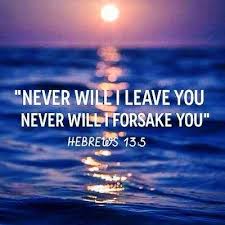
Teach: Occasionally, I will ask a gathering of believers to share a Bible promise. Inevitably, someone will mention Hebrews 13:5, “Never will I leave you, never will I forsake you.” This is what God told Jacob. It’s also what Jesus told his followers: “be sure of this, I am with you always, even to the end” (Matthew 28:20).

Neh 9 hound of heaven

Take: Psalm 139 is one of my favorites. I remember when I discovered it. I was in high school and our teacher had us read the poem, “The Hound of Heaven.” The author, Francis Thompson, is described as a tortured soul, one who battled addictions. But he, like David, and the rest of us, realized that God is a relentless pursuer. But he is also gracious and merciful. No matter what we’ve done, how arrogant or disobedient we are, he will never abandon us.

Task: Make time to read Psalm 139, or the story of the Prodigal Son (Luke 15) and thank God for his gracious mercy. He will never leave you. Ever.

Rebuilding With Nehemiah, Chapter 9 Day 5

Friday: Do We Learn From History?

Text: 16 “But they, our ancestors, became arrogant and stiff-necked, and they did not obey your commands. 17 They refused to listen and failed to remember the miracles you performed among them. (Neh. 9:16-17a)

Neh 9 history words

Teach: Reading through Nehemiah 9:16-30 we find the ups and downs of God’s people. Their experience is summed up pretty well in our text for today. What was the root of their up and down relationship? Arrogance, disobedience, and lack of remembering. They forgot how they got to where they were. They began to think they could handle things all on their own. And as a result the walked in disobedience.

Take: Remember. So often we live as spiritual amnesiacs. Some of Jesus’ final words to his followers came at the Last Supper: this do in remembrance of me. Don’t forget. Daily Bible reading isn’t merely an exercise to cross off our “to do” list. It’s the process by which we keep on remembering.

Task: What miracles has God performed in your life? Take time to remember, and give thanks.

Neh 9 history

Rebuilding With Nehemiah, Chapter 9 Day 4

Thursday: No One Like Our God

Text: 6 You alone are the LORD. You made the heavens, even the highest heavens, and all their starry host, the earth and all that is on it, the seas and all that is in them. You give life to everything, and the multitudes of heaven worship you. (Neh. 1:6)

Teach: When Moses gave the people God’s commandments, he began by telling them to acknowledge that there were no other gods before the LORD. He is the creator, the one who breathed life into everything. As a young teen I learned this truth. We would sing a chorus that said, “There is enough of God in nature, His power is clearly shown. A man has no excuse for wondering. God and heaven are known (see Romans 1:20).”

Take: When I sit out under a clear sky and see the multitude of stars above, I can’t help but think of God speaking to Abraham or David penning Psalm 8. And I want to break into a chorus or two of “How Great Thou Art.”

This verse in Nehemiah speaks to me of perspective: how great God is and how small, or insignificant, I am. And yet he loves me. He loves us. It really is amazing.

Task: We will have God’s perspective when we are aware of our position in relation to him. Psalm 8 tells us that God’s majesty fills the earth, but that he made us to care for his creation. There is trust and relationship implied throughout his Word. Pray through Psalm 8.

LORD, our Lord,
how majestic is your name in all the earth!
You have set your glory
in the heavens.
2 Through the praise of children and infants
you have established a stronghold against your enemies,
to silence the foe and the avenger.
3 When I consider your heavens,
the work of your fingers,
the moon and the stars,
which you have set in place,
4 what is mankind that you are mindful of them,
human beings that you care for them?[c]
5 You have made them[d] a little lower than the angels[e]
and crowned them[f] with glory and honor.
6 You made them rulers over the works of your hands;
you put everything under their[g] feet:
7 all flocks and herds,
and the animals of the wild,
8 the birds in the sky,
and the fish in the sea,
all that swim the paths of the seas.
9 LORD, our Lord,
how majestic is your name in all the earth!

Rebuilding With Nehemiah, Chapter 9 Day 3

Wednesday: What Is Worship?

Text: 3 They stood where they were and read from the Book of the Law of the LORD their God for a quarter of the day, and spent another quarter in confession and in worshiping the LORD their God. (Neh. 1:3)

Neh 9 confession

Teach: You’ve probably heard the saying, “Confession is good for the soul.” Many attribute this to a Scottish proverb, but note that it should read, “Open confession is good for the soul. There is a sense of accountability implied in that openness. The people who listened to the Word were in this together, so there was personal as well as corporate confession taking place.

Neh 9 Jesus is Lord

Take: As you can probably imagine, Jesus had something to say about confession: Therefore whoever confesses me before men, him I will also confess before my father who is in heaven (Matthew 10:32). Paul speaks to the emphatic nature of confession to the Romans: If you declare with your mouth, “Jesus is Lord,” and believe in your heart that God raised him from the dead, you will be saved (Romans 10:9).

And just what is confession? The best explanation I heard was many years ago when I was a counselor at church camp. The speaker was explaining what it meant to confess to a group of teenagers. He told them confessing was telling God everything he knew about them was true. What I like about that is it works for our confession for our salvation and for the sins we commit after.

Task: Take time today to confess. What do you need to acknowledge that God already knows about you?

Neh 9 confession good